
Chevrolet Sonic: Tire and Loading Information Label
Chevrolet Sonic Owners Manual
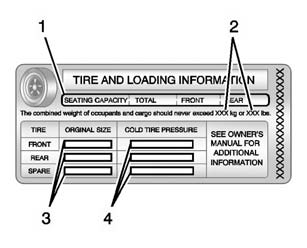
A vehicle-specific Tire and Loading Information label is attached to the vehicle's center pillar (B-pillar). The Tire and Loading Information label shows the number of occupant seating positions (1), and the maximum vehicle capacity weight (2) in kilograms and pounds.
The Tire and Loading Information label also shows the tire size of the original equipment tires (3) and the recommended cold tire inflation pressures (4). For more information on tires and inflation see Tires and Tire Pressure.
There is also important loading information on the Certification label. It tells you the Gross Vehicle Weight Rating (GVWR) and the Gross Axle Weight Rating (GAWR) for the front and rear axle. See “Certification Label” later in this section.


Other info:
Renault Clio. Seat belts
Always wear your seat belt when travelling
in your vehicle. You must also
comply with the legislation of the particular
country you are in.
Make sure that the rear bench seat
is locked i ...
Peugeot 208. Access to the spare wheel
The spare wheel is installed in the boot under the floor.
According to country, the spare wheel may be steel, alloy or of the "space-saver"
type. To gain access to it, refer to the para ...
Mazda 2. i-stop
The i-stop function automatically stops the engine when the vehicle is
stopped at a traffi c
light or stuck in traffi c, and then restarts the engine automatically to resume
driving. The
system ...
Manuals For Car Models
-
 Chevrolet Sonic
 -
 Citroen C3
 -
 Fiat Punto
 -
 Honda Fit
 -
 Mazda 2
 -
 Nissan Micra
 -
 Peugeot 208
 -
 Renault Clio
 -
 Seat Ibiza
 -
 Skoda Fabia
 - Honda Pilot
- Volkswagen ID4
- Toyota Prius
