
Fiat Punto: Using the seat belts
Fiat Punto Owners Manual
The belt should be worn keeping the chest straight and rested against the seat back.
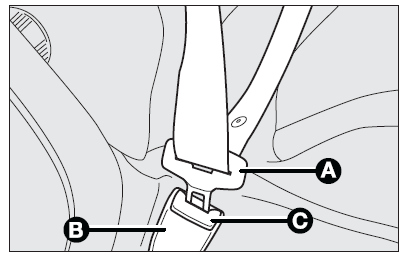
To fasten the belt, take hold the tongue (A) and insert it into the buckle (B), until hearing the locking click.
At removal, if it jams, let it rewind for a short stretch, then pull it out again without jerking.
To unfasten the seat belts, press button (C). Guide the seat belt with your hand while it is rewinding, to prevent it from twisting.
Through the reel, the belt automatically adapts to the body of the passenger wearing it, allowing freedom of movement.
When the car is parked on a steep slope the reel mechanism may block; this is normal. The reel mechanism prevents the webbing coming out when it is jerked or if the car brakes sharply, in a collision or when cornering at high speeds
 Never press button (C) Never press button (C)
when travelling. |
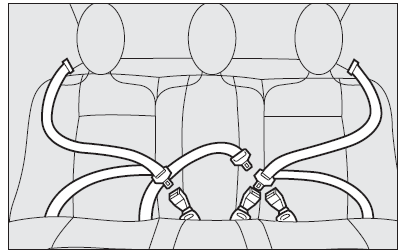
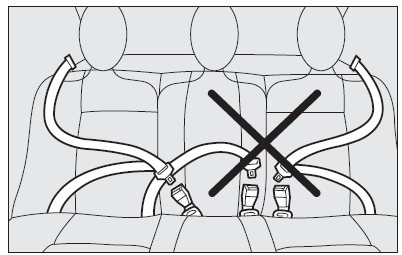
The rear seat is fitted with inertial seat belts with three anchor points and reel for the side seats and adjustable lap belt with two anchor points for the centre seat.
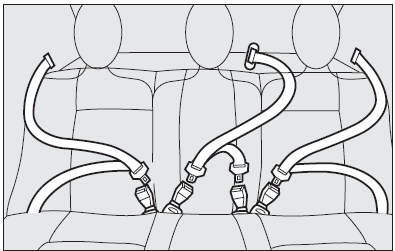
On certain versions the rear centre seat is fitted with seat belt with three anchor points and reel.
In order to avoid incorrect fastening, the tabs of the side seats and the buckle of the centre lap belt are incompatible.
Rear seat belts shall be worn as shown in the figure. To fold the seat back, see paragraph “Extending the boot” in section “Dashboard and controls”.
IMPORTANT Remember that in the event of a violent collision, back seat passengers not wearing seat belts also represent a serious danger for the front seat passengers.


Other info:
Chevrolet Sonic. Customer Satisfaction Procedure
Your satisfaction and goodwill are important to your dealer and to Chevrolet.
Normally, any concerns with the sales transaction or the operation of the vehicle
will be resolved by your dealer's sa ...
Honda Fit. Changing the Rear Wiper Blade Rubber
1. Raise the wiper arm off.
2. Pivot up the bottom end of the wiper blade
until it comes off from the wiper arm.
3. Slide the wiper blade out from the end with
the indent.
NOTICE
Avoid dro ...
Seat Ibiza. Exhaust gasses purification system
Catalytic converter
To conserve the useful life of the catalytic converter
– Always use unleaded petrol. – Do not run the fuel tank dry. – For engine oil
changes, do not replenish with too m ...
Manuals For Car Models
-
 Chevrolet Sonic
 -
 Citroen C3
 -
 Fiat Punto
 -
 Honda Fit
 -
 Mazda 2
 -
 Nissan Micra
 -
 Peugeot 208
 -
 Renault Clio
 -
 Seat Ibiza
 -
 Skoda Fabia
 - Honda Pilot
- Volkswagen ID4
- Toyota Prius
